Libro.fm Audiobooks
- 4.9
- Rating
- 100.00K
- Installs
- Free
- Price

 Analysis by App-foxy
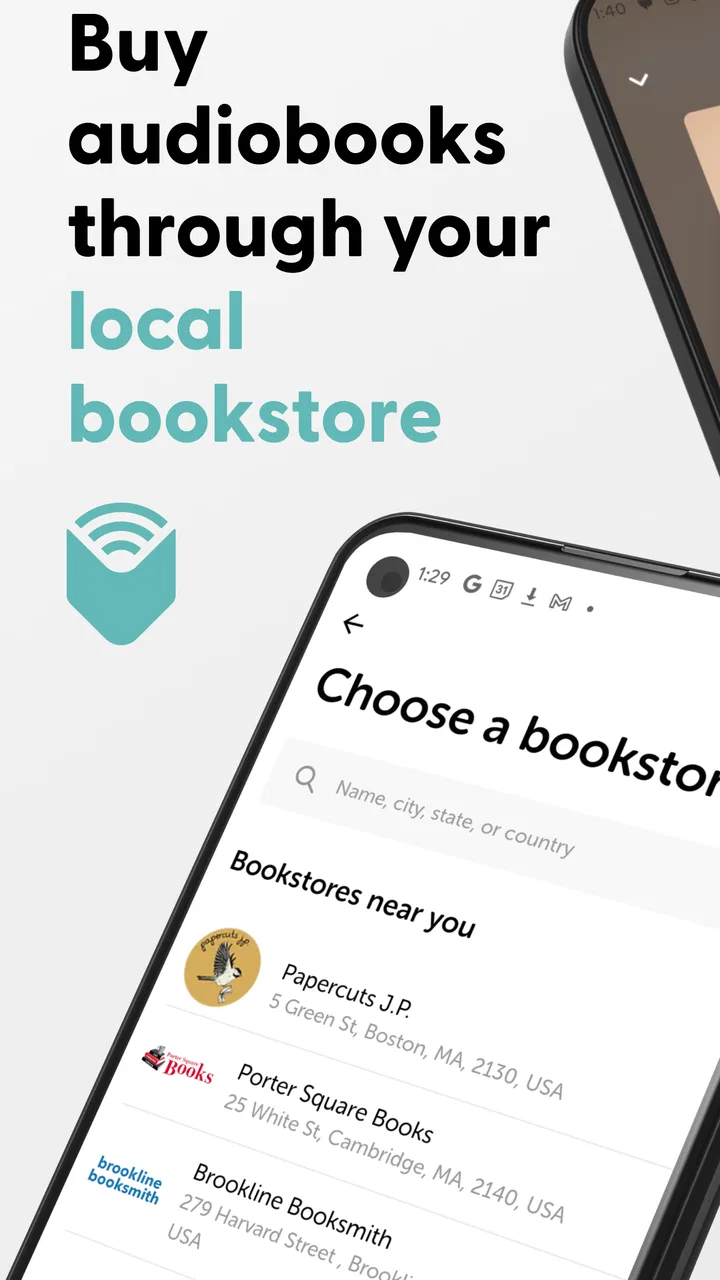
I came to Libro.fm Audiobooks looking for a more personal way to listen to books, and I found an app with a clear identity rather than another general-purpose audio platform. Its main idea is simple: it lets me purchase audiobooks through a local bookstore while keeping the listening experience on my phone. That combination makes it especially interesting for readers who care about where their book money goes, but it also means the app is best judged as both a bookstore connection and an audiobook player.
In everyday use, I found the appeal strongest when I already knew what I wanted to read or listen to. I could browse, choose a title, buy it, and return to it during a commute, a walk, household chores, or a quiet evening. The app is free to install, and the content rating is Everyone, so it is approachable for a wide range of readers. The developer is Libro.fm, and the app sits in the Books & Reference category rather than trying to be a broad entertainment hub.
My short version: Libro.fm Audiobooks is a thoughtful choice for listeners who want audiobook convenience without losing the connection to independent bookselling. It is less compelling for someone who mainly wants the cheapest possible access to a huge subscription catalog, or for a reader who expects every audiobook service to work in exactly the same way.
You May Also Like

 Google Keep - Notes and lists
Google Keep’s Quiet Growth Shows the Appeal of Simpler Notes
As mobile work gets busier, Google Keep keeps winning a simple contest: capture a thought quickly, find it later, and get on with the day.

 Blood Strike: 2.5 Anniversary
Blood Strike’s Loadouts Turn Every Drop Into a Tactical Gamble
A close look at Blood Strike’s custom loadouts: how fast access to signature weapons reshapes its battle royale rhythm, rewards preparation, and narrows the gap between fights.

 Pandora - Music & Podcasts
Pandora’s Music Is Easy to Start, but Harder to Recover
Pandora’s strength is its low-effort path from a seed to a station. Its weak spot is how much confidence it asks you to place in connection, setup, and quiet recovery.

 8 Ball Pool
 Is Built on Rivalries, Rematches, and Routine
A close look at the rivalries, rematches, shared routines, and unanswered safety questions that turn a quick pool match into a persistent mobile community.

 Samsung Music
’s Quiet Strength Is Playing What You Already Own
Its reach comes less from spectacle than from dependable access to a personal library. That simplicity is both the app’s strongest retention engine and its ceiling.

 AccuWeather: Weather Radar
AccuWeather Review: A Quick, Clear Forecast for Everyday Decisions
For everyday plans, the best forecast is the one you can understand quickly. AccuWeather makes rain timing, radar, and local conditions easy to act on, with a few trade-offs.
More From Our News Desk



How Libro.fm feels in its current form
I find the current experience easiest to judge by separating its two jobs: helping me choose an audiobook and giving me a place to listen once I have bought it. That distinction matters in a shared home, where one person may browse while another simply wants to resume a title. The next section looks at how the app’s ongoing development fits into that everyday use, without treating a version number as a promise of specific features.
A focused app instead of a crowded media library
The first thing I noticed is that the experience feels centered on books. That sounds obvious, but it changes how I use it. I am not opening the app to jump between music, podcasts, short videos, and audiobooks. I am opening it because I want to find a book, buy one, or continue listening. That narrower purpose makes the app easier to understand, especially if I do not want a complicated entertainment dashboard.
The store and player serve different moments. When I am choosing something new, I want enough information to decide whether the narrator, subject, or length suits me. Once I have made that decision, I want the player to stay out of the way. Libro.fm works best when I treat those as separate tasks: browse with intention, then use the listening screen as a dependable place to continue the book.
That approach also makes the app a good fit for people who listen in short sessions. I can use a few minutes while preparing breakfast, pause before leaving the house, and pick up the same title later. Audiobooks are often sold as a way to fill long commutes, but I think the more useful benefit is the ability to turn small pieces of idle time into reading time without carrying a physical book.
Buying through a local bookstore changes the decision
The defining difference is the bookstore connection. Libro.fm is not merely presenting audiobooks as anonymous digital files; it makes the purchase feel tied to a local bookseller. For me, that gives the buying process a sense of purpose that ordinary app-store purchasing often lacks. If supporting independent bookstores matters to you, this is not a minor detail. It is the reason to choose this app over a more conventional audiobook marketplace.
There is a trade-off, though. Someone who only compares services by catalog size, discounts, or subscription mechanics may find the local-bookstore focus less important than other features. I would not recommend choosing Libro.fm purely because it is an audiobook app. I would choose it because the purchasing model matches my values and because I still want a practical mobile listening experience.
A useful habit is to decide what kind of listener you are before installing it. If you buy a small number of carefully chosen books and want to keep them as part of your personal library, the model makes sense. If you frequently sample many titles, abandon books after a few chapters, or rely on a rotating subscription collection, you may prefer a service designed around experimentation rather than individual purchases.
What the store reputation tells me, and what it does not
The app has an average rating of 4.9 from around six thousand ratings, with roughly 1.6 thousand written reviews. That level of response suggests that many listeners connect strongly with the service, especially its mission and overall usability. It is encouraging, but I would not treat the rating as proof that every workflow will suit every reader. A highly rated app can still be the wrong fit if its purchase model does not match your habits.
It has passed the hundred-thousand-install mark, which gives me more confidence that it is an established product rather than an experiment with a tiny audience. The app was released on June 27, 2016, so it has had time to mature. Its current version is 7.35.3, and it supports Android 7.0 or later. That older minimum requirement is useful for people keeping an aging phone in service, although current performance will still depend on the device itself and the rest of the operating system.
What has changed and how that matters
I see a mature release as a reason to keep the practical basics in mind, especially when more than one person uses the same phone or account. Before handing over a device, I would check which title is open and whether the listener is using their own account; that simple boundary helps avoid confusion about purchases and listening progress. The next section considers what continued development can mean for keeping those routines dependable.
A mature product with a current version
The version number tells me that Libro.fm has gone through substantial ongoing development rather than remaining a one-off storefront. I am careful not to read a version label as a promise of a particular feature, but the current release does indicate an actively maintained app. For a listening service, that matters because playback, downloads, account access, and library organization all need steady attention over time.
For an existing user, the most important effect of continued development is not necessarily a dramatic visual redesign. It is confidence that the app remains relevant on supported phones and that the basic path from purchase to listening is still being cared for. I would update before an important trip, especially if I planned to rely on downloaded books, rather than waiting until I was already offline.
New users should also separate the app from the wider service. The application is the place where I browse and listen, but the value of the experience depends on the titles I want, the way I prefer to buy, and how much control I want over my library. A polished player cannot compensate for a catalog or purchasing approach that does not fit my reading life.
The practical effect on people who already own audiobooks
If I were moving from another audiobook app, I would not assume that my listening history, bookmarks, or existing purchases would automatically follow me. I would first identify the books I am currently in the middle of, note my position, and finish or manually recreate any important notes before changing services. This is not a criticism of Libro.fm specifically; digital reading ecosystems often keep libraries organized around their own accounts.
For an established Libro.fm listener, the safest workflow is simple: keep the app updated, allow a book to finish downloading before leaving reliable internet access, and check the title in the library before starting a long journey. That small preparation avoids the most frustrating audiobook problem—discovering that the book you expected to have available is not ready when you need it.
I also recommend using the player deliberately rather than treating it like background noise. If I am listening to nonfiction, I pause at the end of a meaningful section and make a quick note outside the app if the idea matters. Audiobooks are excellent for absorbing a narrative, but they are less convenient than an ebook when I need to scan, quote, compare passages, or revisit a specific argument.
A realistic day with the app
Imagine a weekday when I have a twenty-minute walk, a repetitive cleaning task, and a few quiet minutes before bed. With Libro.fm, I can use the walk for a chapter, pause when I reach my destination, and continue later without needing to find the same place again. During cleaning, I may listen more casually, while the bedtime session gives me a chance to slow down and follow the story properly.
The important insight is that the app supports different levels of attention, but the book choice has to match the moment. A complex history title may be a poor companion for a noisy kitchen because I will miss details. A familiar novel or lighter nonfiction can work better there. I find that choosing the audiobook around the activity, instead of forcing one title into every situation, makes the service feel much more useful.
Three habits that make the experience better
I choose the next audiobook before I finish the current one. That prevents a rushed purchase when I suddenly run out of listening material and gives me time to compare narrators or subjects calmly.
I prepare for offline listening before travel, not at the station or airport. A downloaded book is most useful when I have already opened it once and confirmed that it appears correctly in my library.
I reserve demanding books for quiet sessions. If I repeatedly lose the thread during chores, I do not blame the narrator immediately; I first ask whether the activity is competing too strongly for my attention.
These habits are not flashy features, but they address the real friction of audiobook use. The biggest problem is often not starting playback. It is choosing the right title, preserving attention, and making sure the book is ready when the internet is not.
Where it still falls short for some readers
The most obvious limitation is the purchase-centered model. I cannot honestly recommend it as the universal answer for someone who wants unlimited browsing with minimal commitment. If I am unsure whether I will finish a book, a subscription-based alternative may feel more flexible. If I want to borrow digital titles through a library, a library-focused service may be a better first stop. Libro.fm makes more sense when I want to buy and keep a title within its ecosystem.
A second limitation is the nature of audio itself. Even a good audiobook is not a replacement for an ebook when I need visual navigation, quick reference, diagrams, footnotes, or side-by-side comparison. I would choose Libro.fm for stories, memoirs, essays, and many general nonfiction books, but I would be cautious with technical material that depends heavily on tables or visual examples.
There is also a personal preference issue around discovery. Some listeners enjoy algorithmic recommendations and endless browsing. I prefer a more intentional selection process, but people who want the app to constantly surprise them may find the focused bookstore experience less stimulating than a large streaming catalog. That is not a defect for everyone; it is a question of whether you want a curated purchase or an open-ended buffet.
Who should use it, and who should skip it
I would recommend Libro.fm to readers who want to support local bookstores, prefer owning individual audiobook purchases, and value a straightforward place to listen on a phone. It is also a sensible option for people who already know the titles or genres they enjoy and do not need a subscription to justify their listening habit.
I would point frequent samplers toward another option if they regularly start books without finishing them. I would also suggest comparing library borrowing services if free access through a local library is central to their routine. And if most of your reading requires highlighting, searching, or visual reference, an ebook app will probably serve you better, even if you occasionally use audiobooks for fiction.
Families should make their choice based on how they intend to use the account and the content rather than assuming that a general Everyone rating answers every household question. The rating makes the app broadly approachable, but individual audiobook subjects can vary. I would still review the particular title before handing it to a child.
What I would watch in future updates
Because version 7.35.3 represents the current release, I would watch future updates for improvements that reduce the distance between buying and listening. The most valuable changes would be practical ones: clearer library organization, smoother preparation for offline sessions, and better support for readers who move between short listening bursts and longer chapters.
I would also pay attention to how the service balances discovery with its bookstore identity. Libro.fm should remain personal and book-focused, but it must still help me find my next listen without making the store feel overwhelming. The strongest future direction would preserve the local-bookstore purpose while making it easier for a new listener to understand what to buy and why.
My final view is positive, with a clear condition. Libro.fm Audiobooks is not simply a generic player that happens to sell books; its value comes from connecting audiobook purchases with local bookstores. I like that purpose, and I found the app easiest to appreciate when I approached it as a deliberate home for books I genuinely wanted to hear.
If that matches your habits, the free app is worth trying. Start with one title you already know you want, prepare it before an offline trip, and notice whether the purchase model feels natural to you. If you mainly want limitless sampling, library borrowing, or a visual reading toolkit, another service may be a better match. For readers who want convenient listening with a more grounded buying choice, though, Libro.fm offers a convincing and refreshingly focused alternative.
FAQs for Libro.fm Audiobooks
01What is Libro.fm Audiobooks?
Libro.fm Audiobooks is an app that allows users to purchase and listen to audiobooks, supporting local bookstores in the process. Unlike other audiobook platforms, Libro.fm partners with independent bookstores, so every purchase directly benefits the store of your choice. It provides a wide range of titles across various genres, making it a great choice for avid readers.
02How does Libro.fm support local bookstores?
Libro.fm supports local bookstores by sharing a portion of each audiobook purchase with the bookstore of your choice. When you sign up, you can select a partner bookstore, and every purchase you make will contribute to their revenue. This unique model helps sustain independent bookstores and fosters a community-oriented approach to audiobook consumption.
03Is Libro.fm Audiobooks available on both Android and iOS?
Yes, Libro.fm Audiobooks is available on both Android and iOS platforms. You can download the app from the Google Play Store or Apple App Store, allowing you to access your library and listen to audiobooks on the go. The interface is user-friendly and designed to enhance your listening experience across devices.
04Can I listen to audiobooks offline with Libro.fm?
Absolutely, Libro.fm allows you to download audiobooks for offline listening. This feature is particularly useful for those who travel frequently or have limited internet access. Once downloaded, you can enjoy your audiobooks without worrying about connectivity, making it convenient for any situation.
05What are the subscription options for Libro.fm Audiobooks?
Libro.fm offers a monthly membership plan, where you pay a fixed fee to receive one audiobook credit per month. You can use this credit to purchase any audiobook in their library. Additionally, you have the option to buy audiobooks individually without a subscription. This flexibility makes it suitable for both regular and occasional listeners.
Pros
- Wide range of audiobook titles available.
- Supports local bookstores with purchases.
- Offline listening is available.
- No membership fees required.
- User-friendly interface for easy navigation.
Cons
- Limited exclusive content compared to competitors.
- Occasional app stability issues.
- No free tier or trial period offered.
- Requires internet for initial download.
- No option for audiobook speed adjustment.

Libro.fm Audiobooks
Gallery